The best veal kidney à la normande in Paris
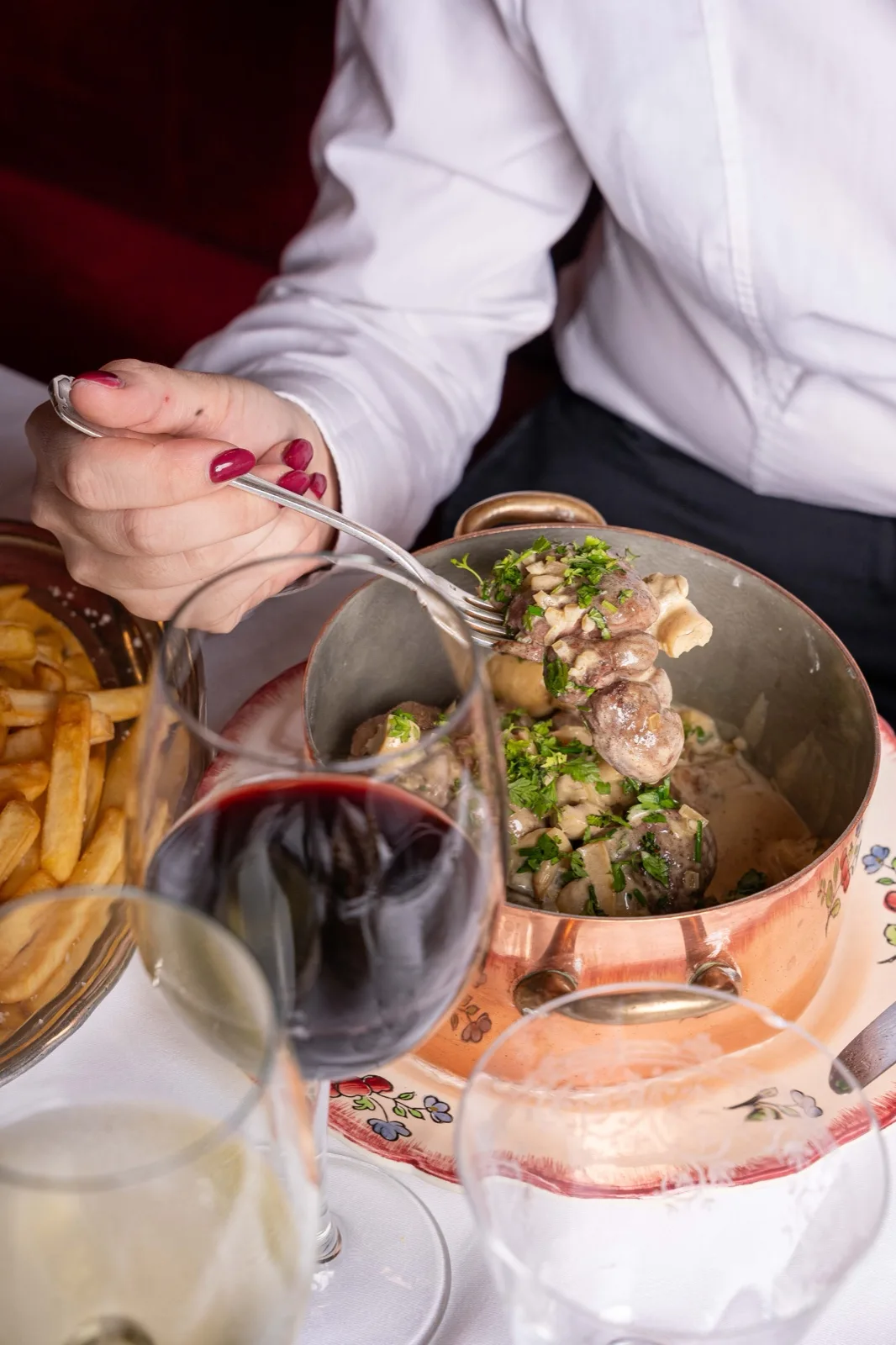
A whole kidney, never sliced in advance, Paris mushrooms caught in butter, calvados flambéed to the last flame and cream folded into the pan juices. It reaches your table in its copper pot, the lid lifted in front of you, with hand-cut chips. Thirty-eight euros, on the board every day, until it runs out.

Where can you eat veal kidney à la normande in Paris?
At Café Max, a bistro in the 7th arrondissement of Paris, founded in 1941, chef Frédéric Vardon serves a whole veal kidney à la normande with Paris mushrooms, cream sauce and hand-cut chips, at 38 euros. The dish sits on the market board rather than the printed menu, but it is there every day of service: it is a house signature. The only limit is the number of portions prepared each day, which can run out before service ends.
Address: 7 avenue de la Motte-Picquet, 75007 Paris, 40 metres from La Tour-Maubourg métro. Monday to Friday, lunch from 12.15pm to 2pm, dinner from 7pm to 9.45pm. A call to +33 1 47 05 57 66 will confirm there is still some left for the moment you plan to come.
How it reaches the table.
A veal kidney is judged before it is cooked. It must be firm, pale, without a pronounced smell. It is a cut that forgives nothing: overcooked it turns tough and bitter, undercooked it stays uncomfortable. Between the two lies a narrow window, and that window is the whole craft.
Here it is cooked whole, never sliced in advance. The Paris mushrooms go into the butter first; the kidney joins them only once they begin to colour. Then comes the calvados, flambéed to the last flame so that only the perfume remains, and the crème fraîche folded into the pan juices. That is the Normandy version: direct, coating, with nothing to thicken it.
It arrives in the dining room in its copper pot, lid on, and the lid is lifted in front of you. This is not staging for its own sake: the kidney goes on cooking inside the pot, and that second decides the texture. The same principle governs our crêpes Suzette flambéed at the counter, where the gesture is part of the dish.
Parsley and chives are snipped at the last moment, and the whole thing is shared with hand-cut chips, on white linen and floral china. It is a bistro dish, not a demonstration. The same spirit runs through our veal brain Grenoble style, another offal classic.
White
Aloxe-Corton “Les Caillettes”
Domaine Comte Senard · 2023 · Burgundy
Red
Moulin-à-Vent “Croix des Vérillats”
Château du Moulin-à-Vent · 2011 · Beaujolais
Two ways to go with a dish of cream and calvados. In white, a rare Aloxe-Corton made from Pinot Gris, with white fruit, fresh and elegant: its freshness stands up to the sauce. In red, a fifteen-year-old Moulin-à-Vent, with stewed black fruit and mellow tannins, whose supple attack goes with the kidney without covering it.
See the wine listFour pieces of advice for making it at home.
Frédéric Vardon has set out his method. The ingredients fit in four lines: top-quality veal kidneys, Paris mushrooms, butter and crème fraîche, and calvados to deglaze and flambé. The rest is in the handling.
- 01
Have your butcher trim the kidneys
Ask your butcher to trim and prepare them so that all you have left to do is cook them. It is the thankless part of the job, and he will do it better than you.
- 02
Mushrooms first, kidney after
Sauté the Paris mushrooms in butter first. Only when they begin to colour does the kidney join the pan. Reverse the order and the mushrooms release their water over the meat.
- 03
Flambé the calvados all the way
Make sure the alcohol burns off completely. That is what removes the bitterness and leaves nothing but the subtle perfume of calvados in the sauce.
- 04
Firm and pink, never grey
Veal kidney is at its best firm and pink. If you are wary of too strong a flavour, the chef advises cooking it slightly longer rather than serving it rare.
Sliced kidney, whole kidney.
The sliced kidney
The kidney is cut into pieces before cooking, usually seared hard and then coated in sauce. It is quicker, more consistent, easier to send out during service. But every piece loses juice, and the sauce ends up compensating for what the meat let go.
The whole kidney
The kidney is cooked in one piece, then sliced as it is served. It keeps its juice, its give, and that almost creamy texture at the centre. It demands watching the cooking to the degree, and it cannot be prepared ahead.
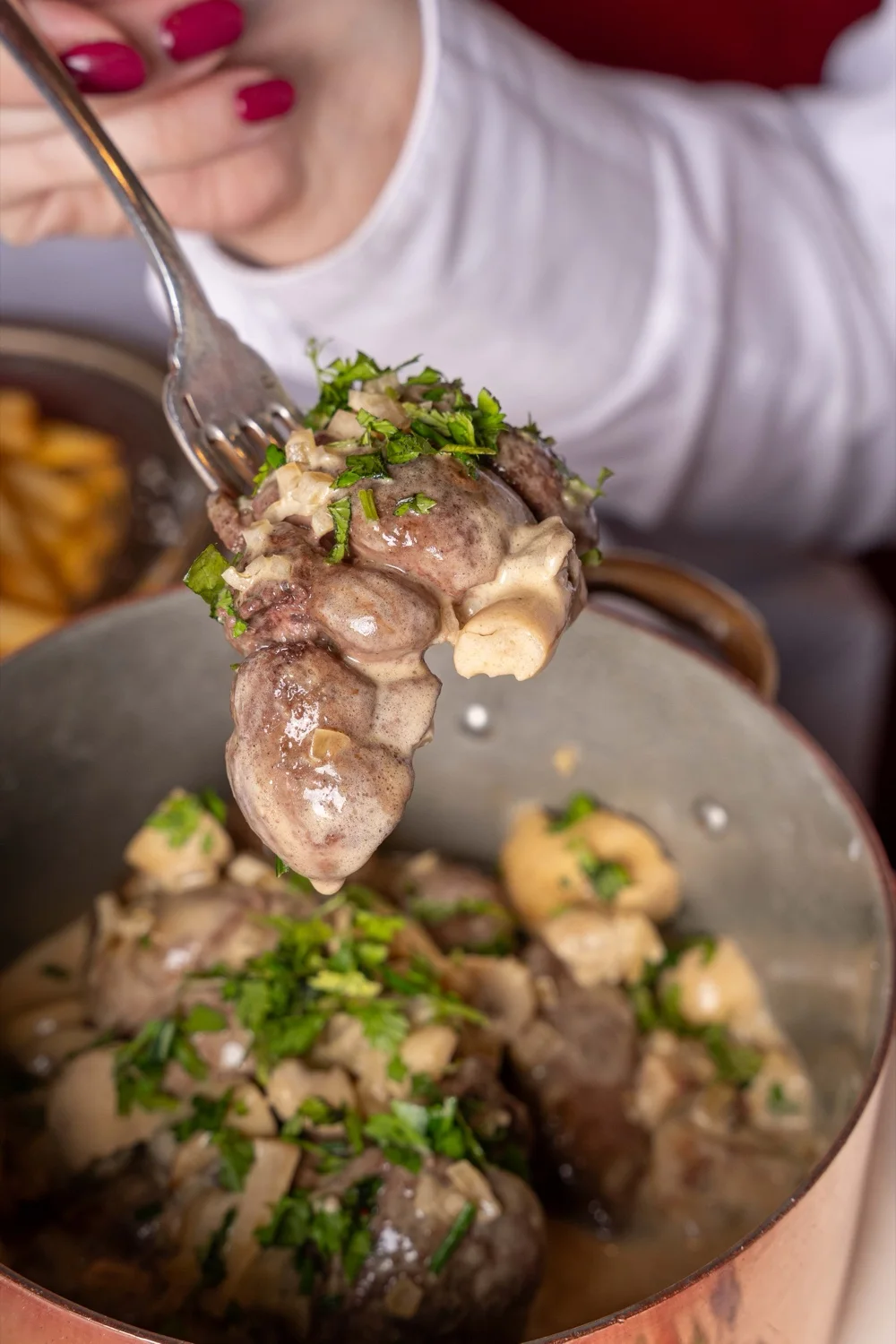
The difference does not show on the menu, it shows in the mouth. A kidney cooked whole stays tender to the core, which is also why it is cooked to order and in counted numbers.
Why so few bistros still serve it.
Kidney was long a pillar of the Parisian bistro. A noble offal cut, inexpensive, it appeared on every board alongside tête de veau and parsleyed calf's liver. People ordered it without thinking twice.
It gradually disappeared from menus, for three simple reasons. The produce demands a serious supplier and a regular order. It requires a degree of cooking control few kitchens want to take on mid-service. And a generation of diners turned away from offal in general.
Normandy cooking comes from a region of dairy, livestock and apple orchards: butter, cream, mushrooms, calvados, and the produce left at the centre of the plate. Nothing complicated, but everything rests on the quality of what goes in.
At Café Max, a house that opened in 1941, the kidney was long a fixture of the permanent menu. In June 2026 it moved to the market board. That is not a withdrawal, quite the opposite: the board is written each morning and the kidney is on it every day. It is a decision to cook it at the pace of the deliveries rather than pull it from a stock.
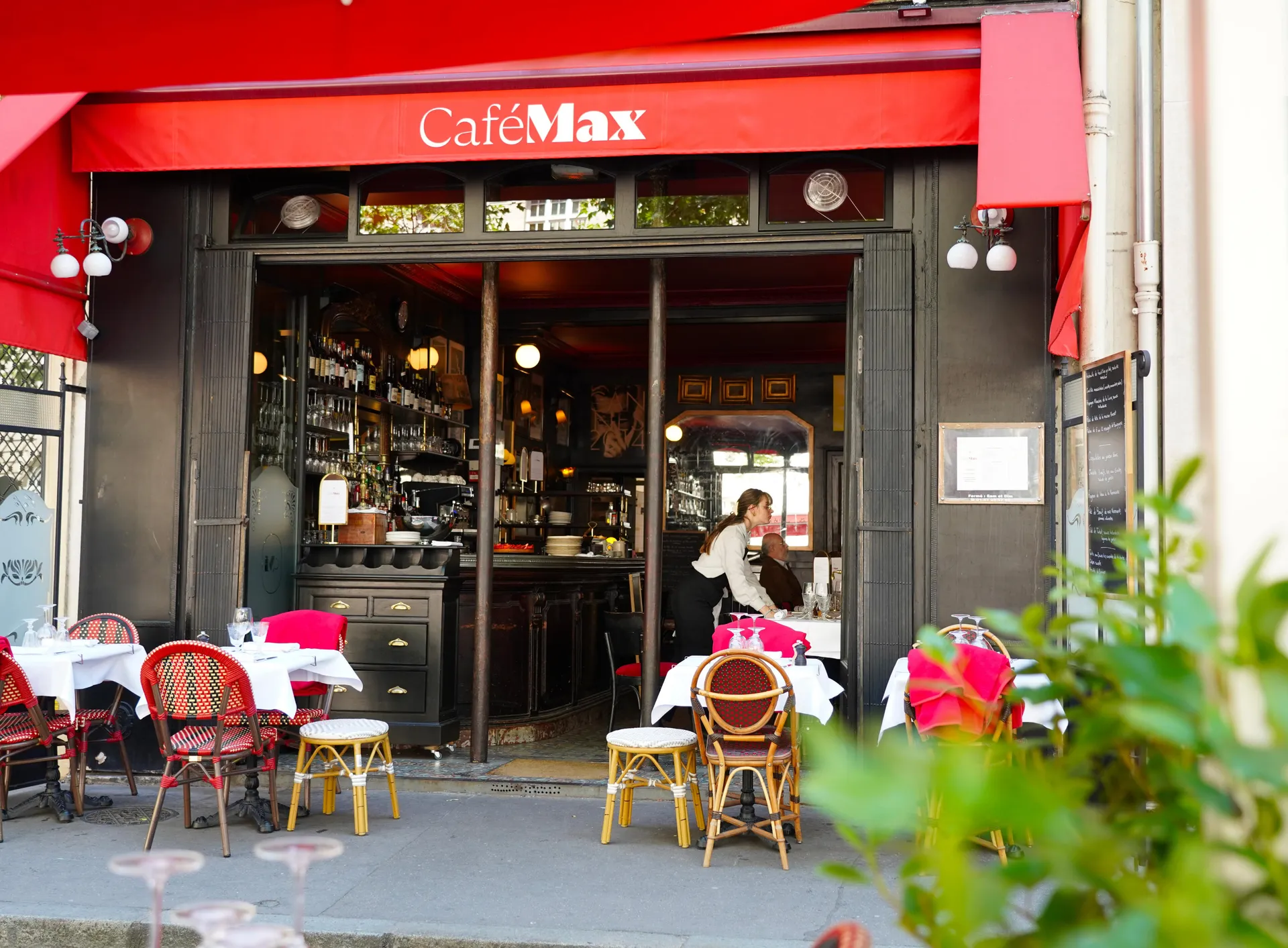
The house, seen from outside.
« I had a wonderful time with the crispy pig ears and the kidneys, which were absolutely stunning. »
« A historic bistro of the Resistance in the 7th arrondissement. »
« You cannot rescue a kidney. Either you have it, or you do not serve it. »
21 Google reviews mention or recommend our veal kidney à la normande, with an average rating of 4.6 out of 5.
-
« Excellent kidneys à la normande. That is what we had come for. »
-
« We chose the veal kidneys à la normande. It was, quite simply, DELICIOUS. »
-
« Childhood memories come flooding back, like those incredible veal kidneys à la normande: the sauce was divine and the kidneys magnificent […] »
-
« A perfect dinner, like last time […] the kidneys divine. »
-
« I feasted on pig's ears and kidneys that were absolutely insane. »
-
« A very Parisian bistro: an old-time atmosphere and generous French cooking (excellent kidneys à la normande). »
Average Google rating : 4.7/5
Frequently asked questions.
A table is waiting.
Monday to Friday, lunch and dinner, 40 metres from La Tour-Maubourg métro. The kidney is on the board every day, as long as the day's portions last.
Veal kidney Paris · Normandy cooking · Bistro near Les Invalides · Paris 7th · Offal · Frédéric Vardon