Veal kidney à la normande
Moulin-à-Vent “Croix des Vérillats”
Château du Moulin-à-Vent, 2011
A fifteen-year-old Moulin-à-Vent, with black fruit and mellow tannins, for the cream and the calvados.
See the dishAll ten crus, winemakers followed from one vintage to the next, and a few old bottles for anyone who thinks Beaujolais doesn't age. In a 1941 bistro, a short walk from Les Invalides.

At Café Max, Beaujolais is by far the first region of the cellar: 155 wines out of the 408 on the wine list. All ten crus are there, from Saint-Amour to Moulin-à-Vent, alongside Beaujolais-Villages and a few white Beaujolais.
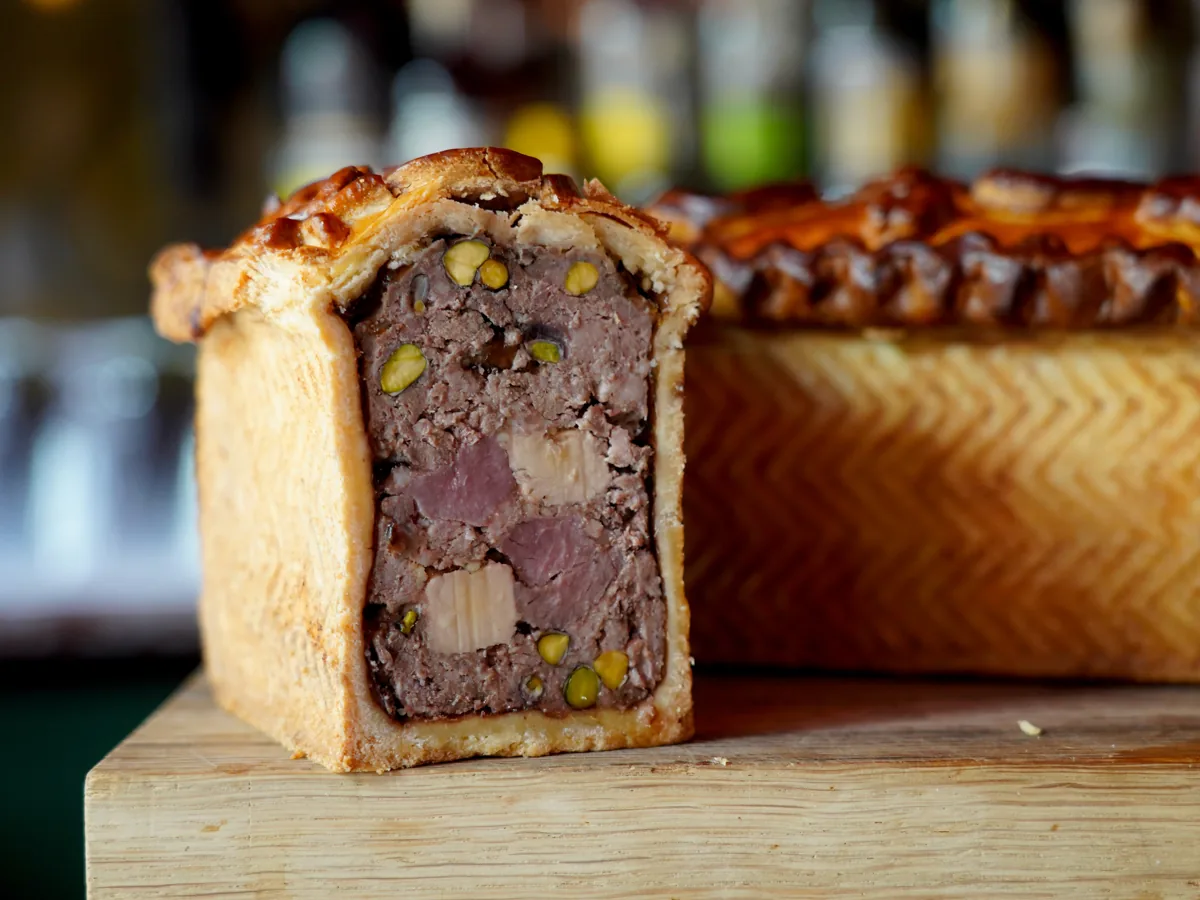
The bistro has been Parisian since 1941, but it is a member of the Toques Blanches Lyonnaises, the chefs' association founded in 1936, and since 2024 of the Bistrots Beaujolais, the network of venues run by the Beaujolais wine council. You can tell at the table: offal, terrines, pâté en croûte, cooking that calls for a fresh wine with little tannin. Gamay, in short.
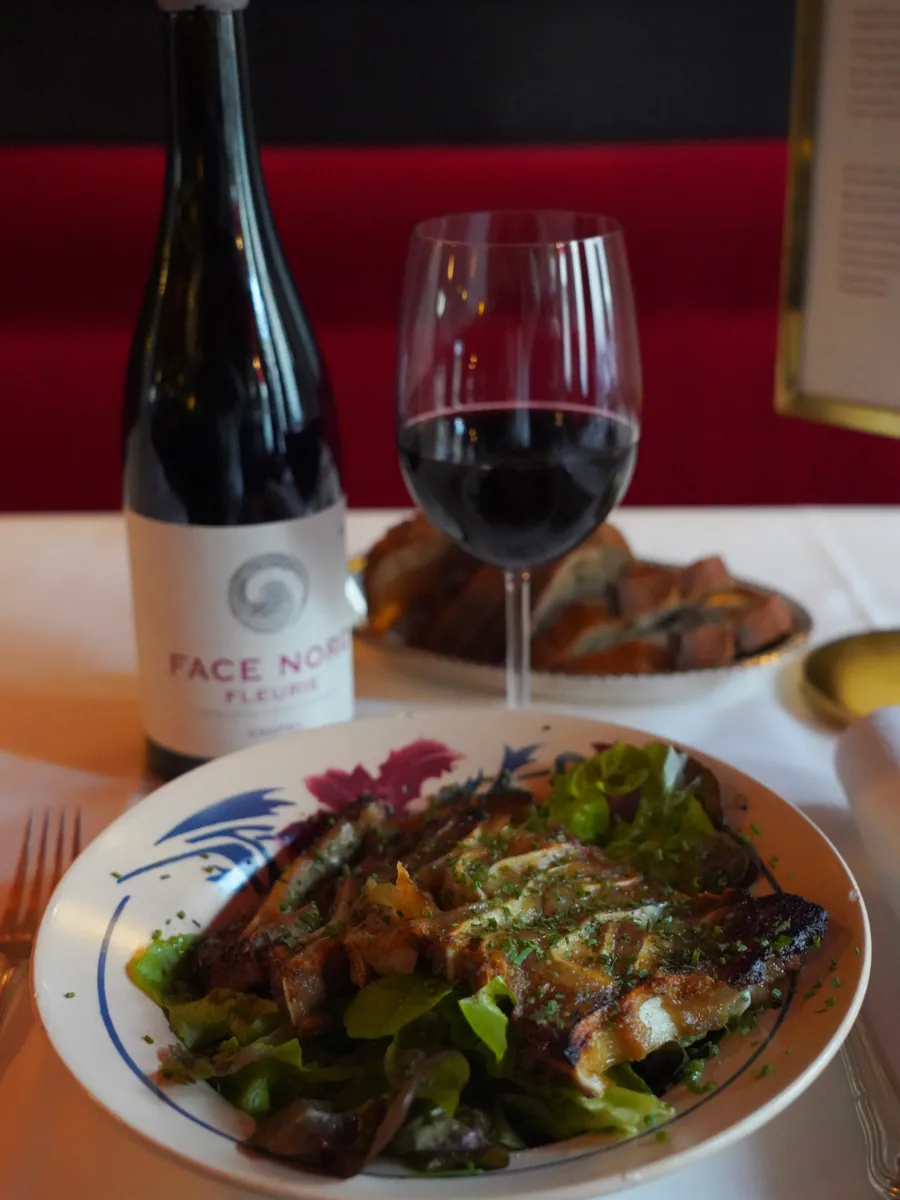
Chef Frédéric Vardon learned his trade, among others, with Alain Chapel. On the list, the Fleurie “Face Nord” comes from the estate his son, David Chapel, founded in Régnié.
The list follows winemakers rather than labels, often across several cuvées and vintages: Domaine Chignard, Château du Moulin-à-Vent, Domaine de Colette, Domaine de la Presle, Domaine J.-P. Rivière and Élisa Guérin, and others besides, over 40 in all. Some have come to sit at these tables, such as France d'Hotelans of Domaine de la Presle, guest of the fourth Révole.
 A Bistrot Beaujolais since 2024
Beaujolais has ten crus, ten villages whose soils give Gamay ten different characters. From north to south, here is what each one brings, and what the list offers today.
The northernmost of the ten crus, and the only one in Saône-et-Loire. Granite and clay give a supple, fruity, often spicy Gamay.
On the list: Domaine du Granit, Franck Bessone · Château des Bachelards (2 wines)
Its name is said to come from Julius Caesar. Granite, schist and clay: structured wines with red fruit and peony.
On the list: Domaine Chignard · Domaine Smith-Chapel (3 wines)
The smallest of the crus, named after the oaks that once covered its slopes. Floral, sturdy wines that age well.
On the list: Domaine du Granit, Franck Bessone · Pascal Aufranc · Famille Dutraive (5 wines)
The “king of Beaujolais”, around its windmill. Manganese-rich granite gives deep wines for laying down, which come closer to Burgundy with age.
On the list: Château du Moulin-à-Vent · Élisa Guérin · Domaine Richard Rottiers (32 wines)
The “queen of Beaujolais”. On pink granite, the cru of finesse: floral, with iris and violet and a silky texture.
On the list: Domaine Chignard · Domaine de la Presle · Château des Bachelards (36 wines)
The highest vineyards in Beaujolais. The most airy of the crus, fresh and floral, to drink young.
On the list: Domaine Anthony Charvet · Domaine Matray & Filles · Domaine J.-P. Rivière (14 wines)
On the Côte du Py, the “roche pourrie”, a crumbling schist, gives dense wines of cherry and kirsch that grow more Burgundian with age.
On the list: Domaine Louis-Claude Desvignes · Laurent Gauthier · Domaine Marcel Lapierre (29 wines)
The youngest cru, recognised in 1988. On sandy granite, a fruity, supple and generous Gamay.
On the list: Domaine de Colette (2 wines)
The largest and southernmost cru, at the foot of Mont Brouilly. Fruity, generous wines, the most approachable of the crus.
On the list: Domaine Les Garçons · Domaine Pierre Cotton (3 wines)
On the slopes of Mont Brouilly, volcanic “blue stone” gives more concentrated, more mineral wines than its neighbour.
On the list: Domaine Dupré Goujon · Domaine Lafarge-Vial · Château de Thivin (9 wines)
On top of these come 16 Beaujolais-Villages and 4 white Beaujolais, made from Chardonnay. See all the Beaujolais on the wine list
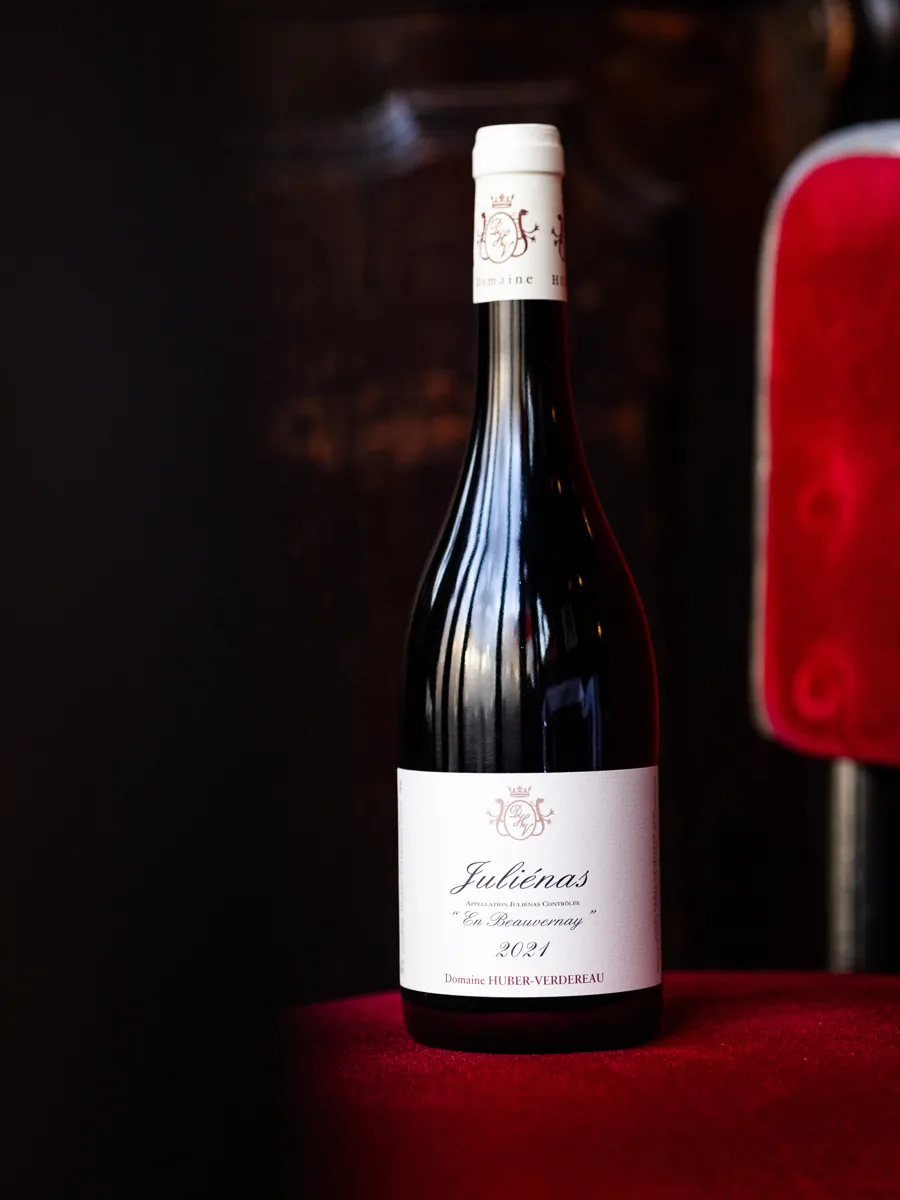
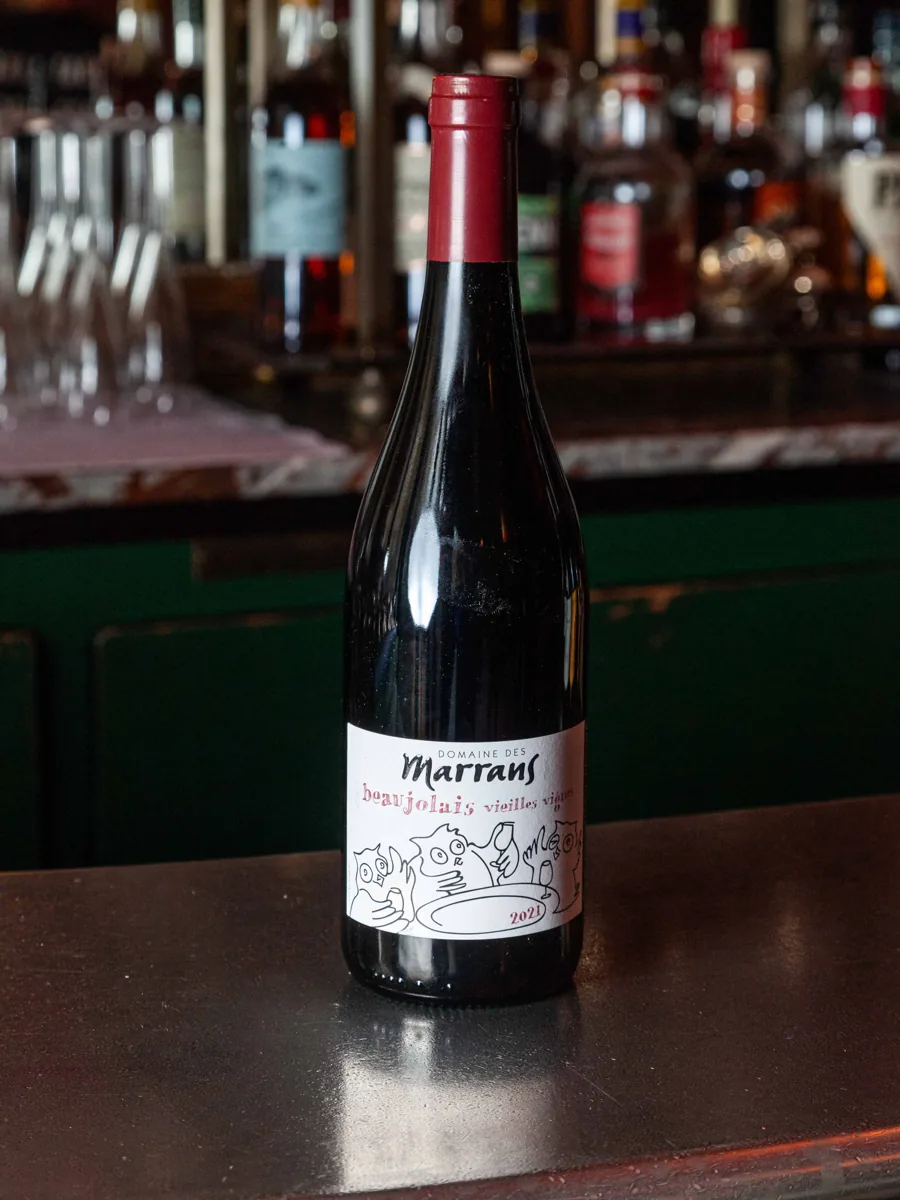
Beaujolais is said to be made for drinking young. The crus say otherwise: 17 bottles on the list are ten years old or more, the oldest being a Moulin-à-Vent 2000.
Some of the Beaujolais also come in magnum, enough to share a cru among eight or ten.
Fresh, fruity, low in tannin, Gamay is the wine of bistro cooking. Three of the house's pairings, with dishes from the menu:
Moulin-à-Vent “Croix des Vérillats”
Château du Moulin-à-Vent, 2011
A fifteen-year-old Moulin-à-Vent, with black fruit and mellow tannins, for the cream and the calvados.
See the dishFleurie “Face Nord”
Domaine Chapel, 2020
A fine, fresh Fleurie that answers the richness of the pork and the bite of the mustard vinaigrette.
See the dishBeaujolais-Villages “La Cabane de Marius”
Domaine Matray & Filles, 2023
To start the meal in red: a Gamay with red fruit and a clean finish, served cool.
See the dishIn Beaujolais, the révole is the meal that ends the harvest. The secateurs are put away, the table is laid, and everyone drinks the wine of those who have just made it.
Since 2023, Café Max has made it an event in Paris: a Lyon-style mâchon to start, a dinner by the Chef, a winemaker at the table with the guests, and one rule, everyone brings a bottle of Gamay to share.
The first, in October 2023, was written up by La Revue du Vin de France as a “paulée du gamay”. The fourth, on Thursday 8 October 2026, welcomed France d'Hotelans of Domaine de la Presle.

“Chef Fred Vardon, who took over the famous Café Max, has made it a place of great conviviality, built around his solid bistro cooking and Beaujolais wines.”
“Pairing it with a Beaujolais of character, such as a Chiroubles or a Moulin-à-Vent, is a marvel.”
“In Beaujolais Nouveau season, they give in to Anthony Charvet's very fruity “beaujo beau”, served in magnum.”
On Google, around thirty reviews mention the cellar, and several mention Beaujolais.
“We had a brilliant time, would highly recommend, especially if you like wine; the wine list is MASSIVE!”
“He guided me through the menu, and helped me choose a wine that was spot on.”
“A VERY fine Beaujolais cellar.”
“Too bad, I didn't do justice to the Beaujolais list, which is as long as your arm.”
“An extensive, interesting wine list with a focus on Beaujolais.”
“A well-stocked wine list that shows a sincere interest in quality wines.”
Monday to Friday, lunch and dinner, at 7 avenue de la Motte-Picquet. A short walk from Les Invalides.